Alexander Tsepkov Project Portfolio
Software developer and data geek with 18+ years delivering web, mobile, and defense systems that ship to production. My focus is on analytics platforms, APIs and developer tooling. My open-source work ranges from compilers and automation frameworks to GIS data products. I weave AI-assisted workflows into day-to-day engineering to accelerate delivery and quality.
Understanding Leverage in Real Estate Investing
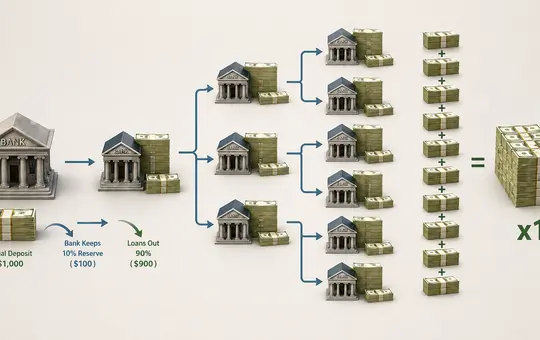
 One of the most powerful features of real estate investing is leverage - using borrowed money to control a large asset with a relatively small cash down payment. It doesn't matter if you're a large syndicator buying $100-million apartment complex using other people's money or a rookie investor looking to buy your first rental to house-hack, you have access to leverage and it's probably a smart idea to use it. There is no other asset class aside real estate for which this statement holds true. Unless you're Michael Burry or George Soros planning some clever bet against the market, you should avoid leverage in stocks. And using leverage in crypto is basically lighting your money on fire. In real estate, however, leverage is not only accepted, it's encouraged.
The fundamental difference comes down to liquidation rules. In both stocks and crypto, the lender decides when to liquidate your assets, often by looking at the real-time value of your collateral. In real estate, the snapshot of the collateral is only taken at the time of the purchase/refinance (appraised value). There is a baked in assumption that this value will not fall post-purchase. There is no margin-call trigger baked into this mechanism. As long as you keep making payments, the asset is yours to keep, even if you're currently underwater (current value below bank's loan amount).
Leverage isn’t free money, but it’s a game-changer. When property prices rise, your entire 100% ownership goes up, even though you only put in 20% (or less) of the cash. But that's only part of the upside. Your rents go up on the full 100% of the value too. Unfortunately so do your taxes (I didn't say there were no carrying costs). In effect, you’re earning returns on other people’s money - and on the full value of the asset, not just your down payment. This is why many investors achieve higher growth rates in real estate than the unleveraged averages suggest. (Of course the reverse can happen if prices fall – leveraged losses are bigger too – but smart investors manage that risk.)
Comparing Apples to Oranges: Stocks vs Real Estate Returns
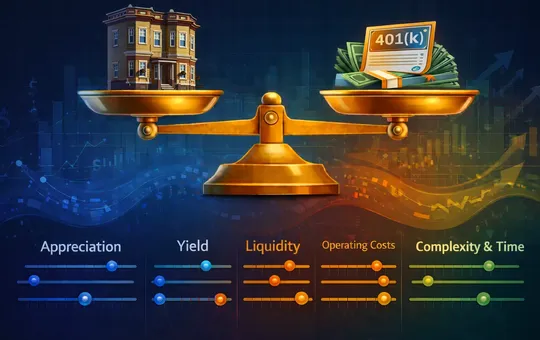
Many stock market investors fail to appreciate real estate, comparing 8-10% annual returns that the stock market averaged over the last 10 years to the seemingly puny 2-5% growth of real estate. What they fail to understand, however, is that no investor buys real estate with cash, unless they're either parking money or want to eliminate holding costs in preparation for another deal.
As Investopedia points out: $25,000 invested unleveraged in stocks buys $25,000 of value, but that same $25,000 could buy roughly $125,000 of property with a mortgage. The effective return on your actual cash is much higher. A 5% price increase produces a 25% return on the $100K cash invested - far outpacing the nominal 5% asset increase. Same can be said for rents - it's as if your dividend goes up 25% every year. Real estate is a completely different game. Not only are double-digit returns normal here, even infinite returns are possible. Allow me to walk you through my own case study.
Case Study: Infinite Return
In May of 2015, I closed on a property in Chicago. I bought it with cash, for about $60,000. Chicago experienced a much greater decline during the 2008 sub-prime mortgage crisis, and property prices stayed depressed there significantly longer. After a ~$30,000 rehab, and owning it for a year I could do a cash-out refinance to reinvest the money elsewhere. Property appraised above $150k, allowing me to pull out $120k out. This means I freed up $30k more than I put into the property to begin with (while still owning 20% of it and controlling 100%). I have zero of my own dollars tied into this property now, while still getting most of the benefits (rent = $1500/mo, total expenses = $1000/mo). This is infinite return.
The return is lower than the original, but it's still positive and I can find a better investment elsewhere for the other $120k. Reinvesting capital this way basically allows us to build a "matrioshka doll" of leverage that one could only dream about in stocks. Real estate takes more work, but the systems work the same in any market. Build them once, and reuse them for decades. This is the core value proposition of Investomation, we help you build those systems.
Riding the Interest-Rate Waves
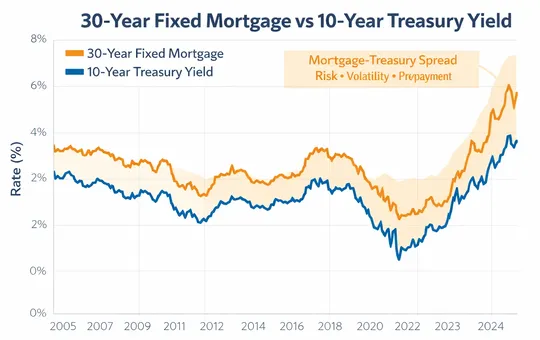
 Real estate leverage also interacts with interest rates in a unique way. As mortgage rates fall, buyers rush in and prices tend to rise (sometimes sharply). As rates rise, buyer demand cools and prices stabilize or even fall, creating bargains. Savvy investors exploit these “waves” rather than fixating on market peaks or troughs. For instance, high rates often mean lower home prices and less competition, so it’s a great time to buy rental properties and negotiate aggressively. Once rates drop (making refinancing available), those investors refinance to pull out equity or lower payments, like I did in my infinite return example. This cycle of buying low and refinancing high is exactly what savvy landlords do: buy when others are sidelined, then cash out when the window reopens.
In practical terms, a common strategy emerges:
- Buy at high rates (prices low). When mortgage costs are steep, fewer buyers are active. Investors can demand price discounts or seller concessions. This is actually a form of leverage: you’re using others’ risk (their capital at a more expensive time) against them.
- Refinance at low rates. When rates fall again, those properties are now worth more. You can do a cash-out refinance – converting equity into cash or paying down the loan – to “park” profits or fund more buying. In other words, you’re transferring this investment to cheaper debt and pulling out capital for new deals.
- Repeat (the BRRRR cycle). Industry veterans call this the BRRRR strategy – Buy, Renovate (or Rent), Refinance, Repeat. It works particularly well when you can buy cheap (during high-rate, low-price periods). Each time you refinance at a lower rate, you lock in better leverage and free cash to leverage again.
This cyclical approach means you don’t necessarily need to be rich from the start. Instead of waiting for the “perfect” market or top conditions, you simply buy strategically in each cycle. Over time, even a small initial investment can snowball into a large portfolio by constantly recycling that equity through new loans. In fact, cash-out refinances on existing rentals are a textbook way to fund new purchases. Each round of leverage builds your net worth.
Takeaways
In real estate, leverage is not just about buying more property; it’s about timing and financing intelligently. Used prudently, leverage lets ordinary investors turn modest savings into rapidly growing equity. The key is understanding that real estate leverage is fundamentally different from stock margin. As long as you make your mortgage payments, there are no margin calls forcing a sale. And by riding interest-rate “waves” – buying when rates are high and prices are low, then refinancing when rates drop - you can steadily build wealth.
Related posts